Why it matters
Impact and Sustainability
An impact proven over ten decades — and a plan to keep the press viable long after the grant ends.
Project impact
Five dimensions of return
Spiritual
Outreach of the evangelization mission through religious books, catechisms, parish and pastoral bulletins, and baptismal certificates that serve as a reference where civil registration is inadequate.
Educational
Printing of textbooks, school supplies, and report cards for the entire province, and internships for nearly 30 technical secondary schools in Kisantu alone.
Economic
Creation of direct and indirect jobs — technicians, agents, drivers, warehouse workers — and revitalization of the local economy in a region lacking industry.
Cultural & Historical
Preservation and reproduction of ecclesiastical, traditional and cultural archives, and printing in the Kikongo language: the Kongo weekly calendar, traditional medicinal plant uses, Kongo proverbs and song rituals.
Social
Printed and simplified documents carry information to the most remote areas: health, food and nutrition, hygiene, housing, environment, clothing and road maintenance.
Beneficiaries
Who the rebuilt press serves
Direct — nearly 1,500 organizations and individuals
- Religious services of the Diocese: Diocesan Pastoral Center, Bursar's and Procurator's Offices, religious congregations
- Church social services: Caritas Coordination, Development and Health, Health Zone, Central Drug Distribution Center, Catholic hospitals and health facilities
- School education: the Subdivision and Inspectorate of Education, and the Coordination of Catholic-affiliated schools
- Public administration: the Lukaya Unified Division, the Tax Department, the DGRKC, the Trade and Economy Department
- Merchants and politicians: posters, banners, printed hats, polo shirts and logos
- The 68 heads of households employed in the administrative and technical staff of the press
Indirect — more than 500,000 families
Indirect beneficiaries are the families living within the Diocese's area who are affected by the services and structures that use the printing press: civil registration documents, commercial documents, medical administration such as patient records and prenatal consultations, and educational administration documents such as report cards and attendance records.
Approximately 850 religious, public and private institutions — primary and secondary schools, hospitals, public administration services — together with 650 individuals make up the direct beneficiary base.
Viability
Built to last beyond the grant
Institutional viability
The press is a technical support structure of the Diocese of Kisantu, which has held legal status granted by the Congolese State since 1966. It works with the Labor Inspectorate, the National Social Security Fund, the National Institute for Vocational Training, the Economic Inspectorate and the Directorate General of Taxes.
Technical viability
Staff will be selected from among the most qualified and trained in new printing technologies. Equipment is chosen for efficiency but adapted to the local environment: affordable maintenance and repair, with qualified in-country agencies for spare parts.
Economic viability
Demand is constant and the press holds a monopoly locally. A dynamic marketing department will anticipate market needs, negotiate advance contracts, and plan technological upgrades to protect the client base against Kinshasa competitors and currency fluctuations.
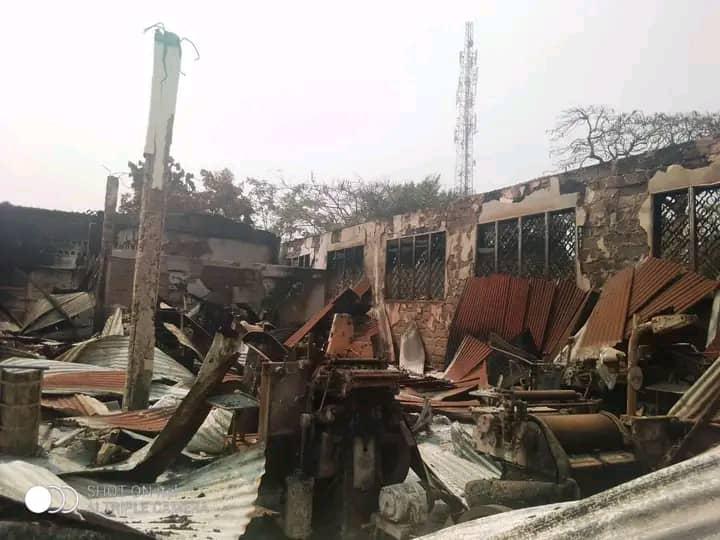
“Founded in 1922, the press operated continuously for 101 years — to the day — before the tragic fire. It has accumulated experience and customer loyalty that consolidate its presence as a reliable player in the sector.”
Governance
Monitoring, evaluation and visibility
The Diocese will establish a professional management team for the printing house, composed of experts in the field. A business plan will be developed to ensure the printing house's economic viability, and partnerships with schools, religious institutions and NGOs will ensure a steady demand.
The project will be visible from the outset through its physical manifestation: the building will be reconstructed on the site that has belonged to the printing works since 1922. A sign displaying the project title, the identity of the funder, the project owner and the duration of the works will be erected in front of the site.